7/17/2026
Ad MeasurementMERD2C
The Reality Gap is the difference between the revenue an ad platform reports for a campaign and the revenue a brand actually retains after cancellations, cash-on-delivery failures, and returns. It exists because ad platforms count a conversion when the purchase event fires and never receive the post-click fulfillment outcome, so failed orders stay counted as revenue permanently.
When a customer completes checkout, the platform's pixel or conversion API records a purchase event, and the sale enters reported revenue at that moment. Everything that happens afterward, the order being cancelled before dispatch, the customer refusing a cash-on-delivery parcel at the door, the product coming back inside the returns window, happens in the brand's store and logistics systems. Ad platforms have no connection to those systems, so no correction ever travels back. This is not a defect in any one platform; it is how conversion measurement works everywhere. The platform measures what it can see, and it cannot see past the click.
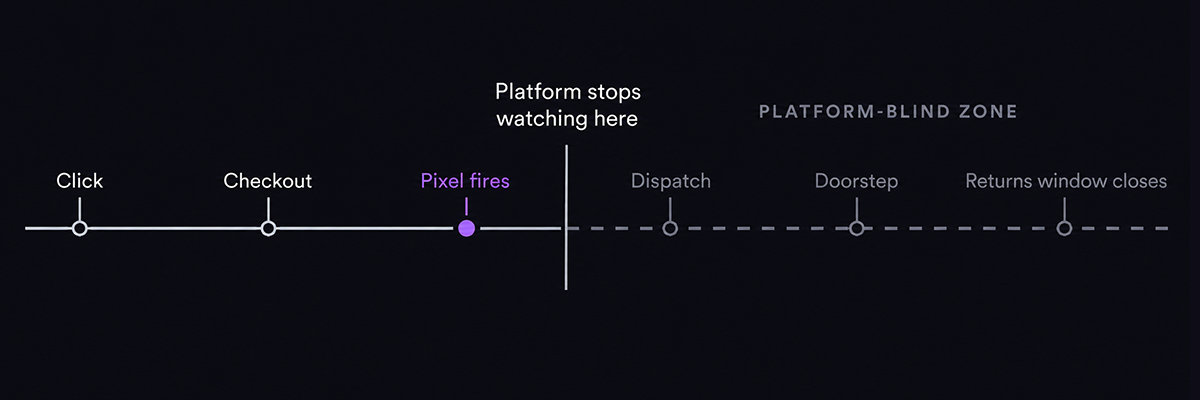
The platform's measurement ends when the pixel fires. Everything after happens in the store and logistics stack.
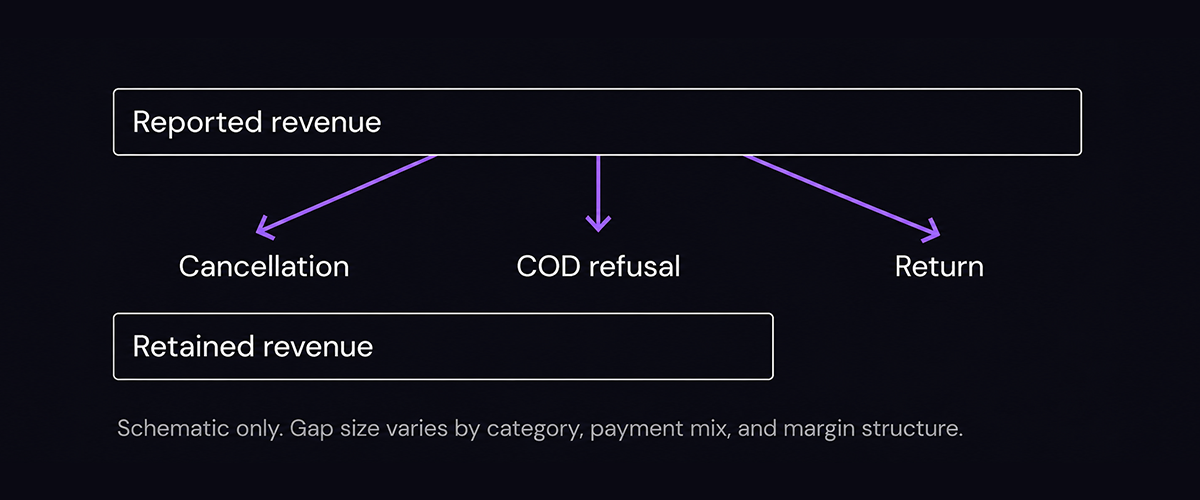
Revenue leaves reported numbers in three places. Cancellation: the order is called off before dispatch, often within hours, but the conversion was already counted. COD refusal: the parcel travels to the customer, the customer declines to pay at the doorstep, and the courier returns it, a failure mode specific to cash-on-delivery markets. Return: the order was delivered and paid, then sent back within the returns window and refunded. All three reduce what a brand keeps. None of the three reduces what the platform reported.
Two structural features of Indian D2C widen the gap beyond what brands in prepaid-dominant markets experience. First, cash on delivery remains a major share of orders, and every COD order carries a doorstep veto that no pixel can price in. Second, return rates in high-volume categories, fashion and accessories above all, are structural rather than exceptional: size, fit, and expectation drive returns even when nothing is wrong with the product. Our weekly D2C Honest Data series publishes verified figures on both, each with its source named.
Measuring the Reality Gap means joining two datasets that normally never meet: ad spend and reported revenue from the platforms, and order plus delivery outcomes from the store and logistics stack. Joined, they produce an estimated gap, a stitched approximation of retained revenue set against reported revenue.
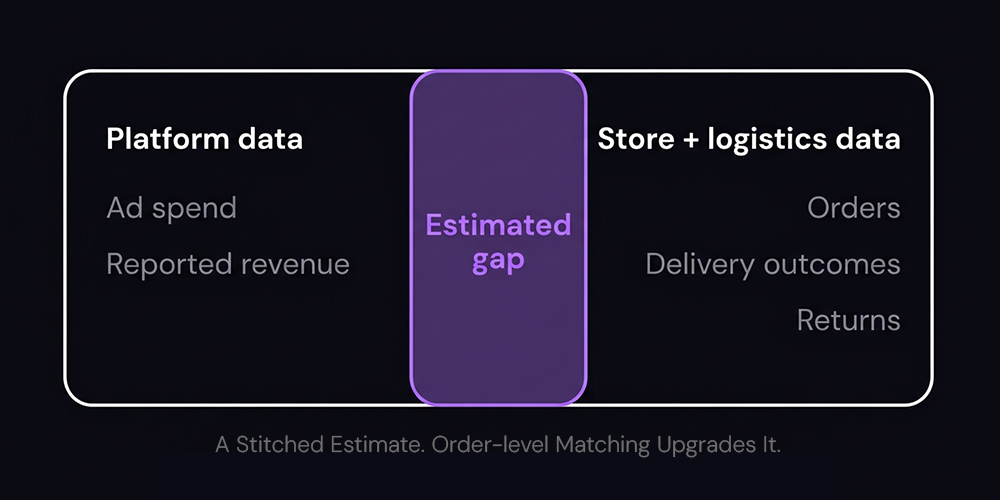
It is an estimate, and honest measurement labels it as one; converting an estimate into a reconciled figure requires order-level deterministic matching between platform records and store records. The operating discipline built on this measurement is the month-end close for ad spend, covered in its own article.
This page defines a measurement problem; it does not claim a universal size for it. The gap varies by category, payment mix, and margin structure, and any source quoting one universal percentage for all brands is compressing away the differences that matter. Verified category-level figures, with sources, live in the D2C Honest Data series.
No. Attribution decides which ad gets credit for a sale. The Reality Gap concerns what happens after the sale is credited: whether the revenue was actually retained once cancellations, COD failures, and returns played out. A brand can have perfect attribution and still plan on numbers inflated by the gap.
See your own estimated gap. Adverti Chat joins your ad spend with your store and delivery outcomes and shows a stitched estimate of what you actually kept, next to what was reported. Free plan, read-only access, no card.
Don’t miss our most popular and impactful reads.
Connect your Meta and Google accounts. Your first audit is ready in 30 seconds. Free forever on the Free plan.
We use cookies to keep Adverti working, understand how the site is used, and measure our ads. You can accept all, reject all, or choose what you allow. Read more in our Cookie Policy.